Duke University
Center for Interprofessional Education and Care
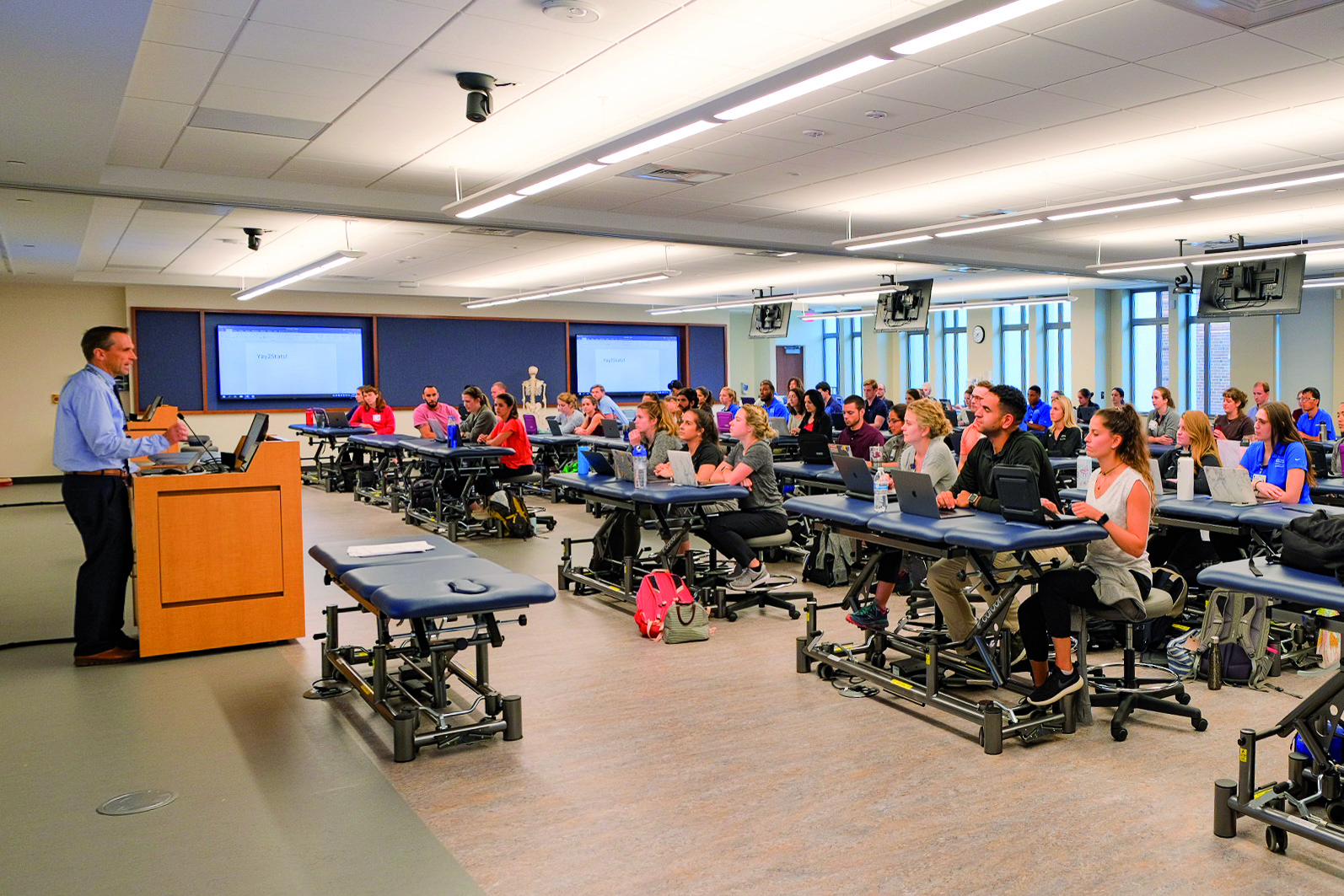
Duke University, home to some of the nation’s most respected healthcare programs, expanded its Medical Campus with the new 104,500-square-foot Center for Interprofessional Education and Care. Designed by Ayers Saint Gross, this five-story facility sets a new standard for interdisciplinary collaboration by integrating the Medical School, School of Nursing, and Department of Orthopaedic Surgery. Connected to the existing Pearson Building via a multi-level skybridge, the center strengthens academic, clinical, and research partnerships across Duke Health’s core programs.
Designed to integrate seamlessly with the architectural vocabulary of the existing nursing facilities, the building enhances spatial connectivity, enabling departments that were once separated to share resources, technologies, and innovative teaching environments.
A Flexible, Technology-Rich Environment for Health Sciences Education
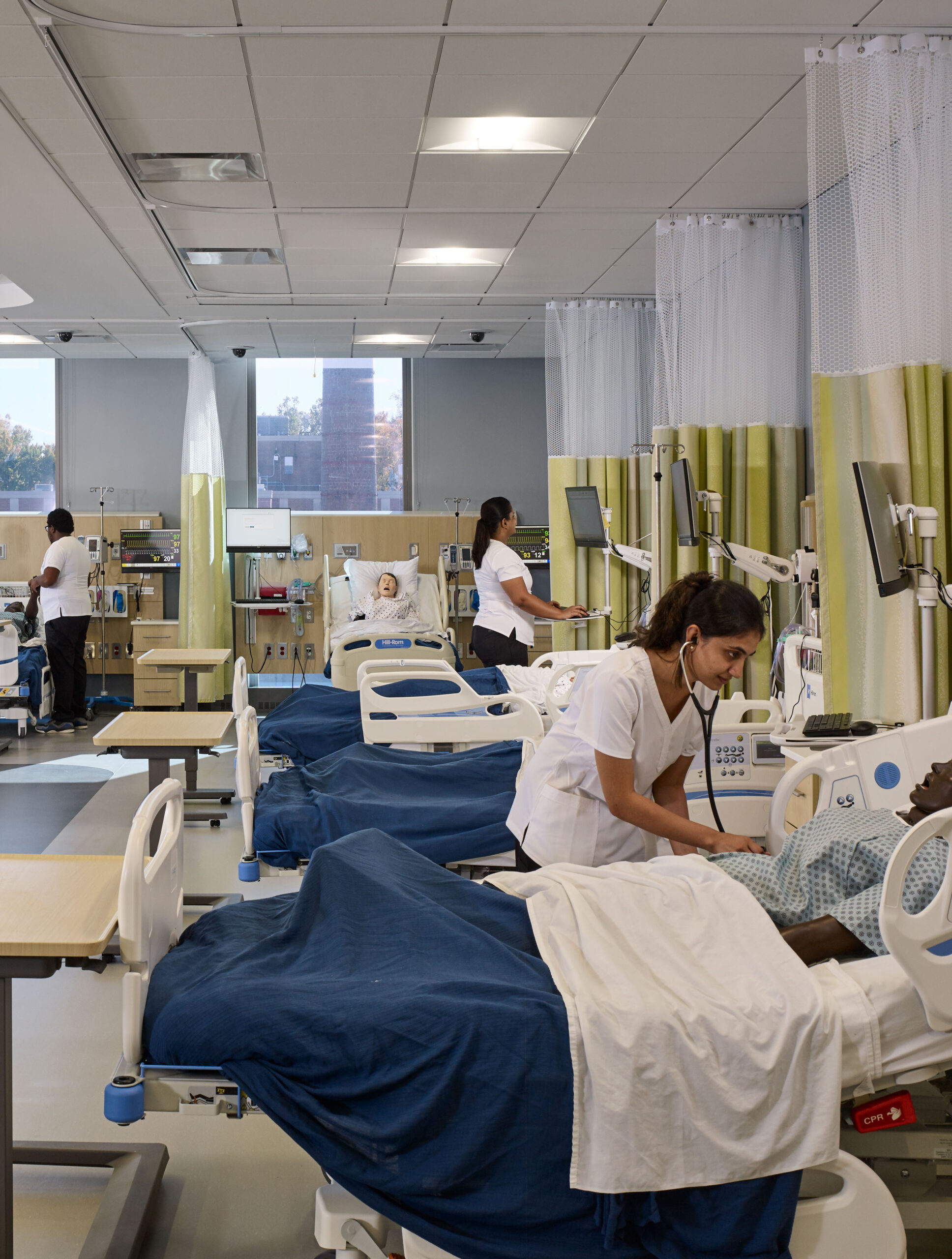
The building houses a wide range of instructional and research spaces, including large active learning classrooms, seminar rooms, expanded clinical learning suites, simulation labs, and a state-of-the-art Health Innovation Lab. These environments accommodate the latest pedagogies, supporting hands-on learning, problem-based instruction, and interdisciplinary team training.
Student wellness and collaboration were prioritized through increased access to daylight, dedicated breakout rooms, quiet study areas, and a mix of formal and informal gathering spaces. The design promotes engagement among medical, nursing, and therapy students, reinforcing Duke’s mission of preparing clinicians who excel in integrated patient care.
MEP Systems Supporting Simulation, Research, and Collaborative Learning
Mueller Associates provided mechanical, electrical, plumbing, and fire protection engineering systems that support the building’s highly adaptable learning and simulation environments. Key elements of Mueller’s MEP design include:
-
Flexible HVAC zoning to support large classrooms, seminar spaces, and specialized simulation labs
-
Advanced ventilation and exhaust strategies tailored for skills training areas and clinical practice environments
-
Robust electrical infrastructure supporting instructional technologies, simulation equipment, and digital learning tools
-
Water-efficient plumbing systems serving clinical learning suites, lab functions, and the Health Innovation Lab
-
Integrated fire protection systems designed for safety, reliability, and full code compliance
These systems provide operational efficiency, occupant comfort, and the environmental control required for sensitive instructional and clinical functions.
Read more about Mueller’s work on this project in our newsletter Momentum.
Consulting Services
- Electrical Power
- Fire Alarm & Detection
- Fire Protection
- HVAC Systems
- Lighting Design
- Plumbing Systems
- Sustainable Design
Architect
Ayers Saint Gross
Client History
-
2019
InterProfessional Education and Care Building
-
2017
Rubenstein Arts Center



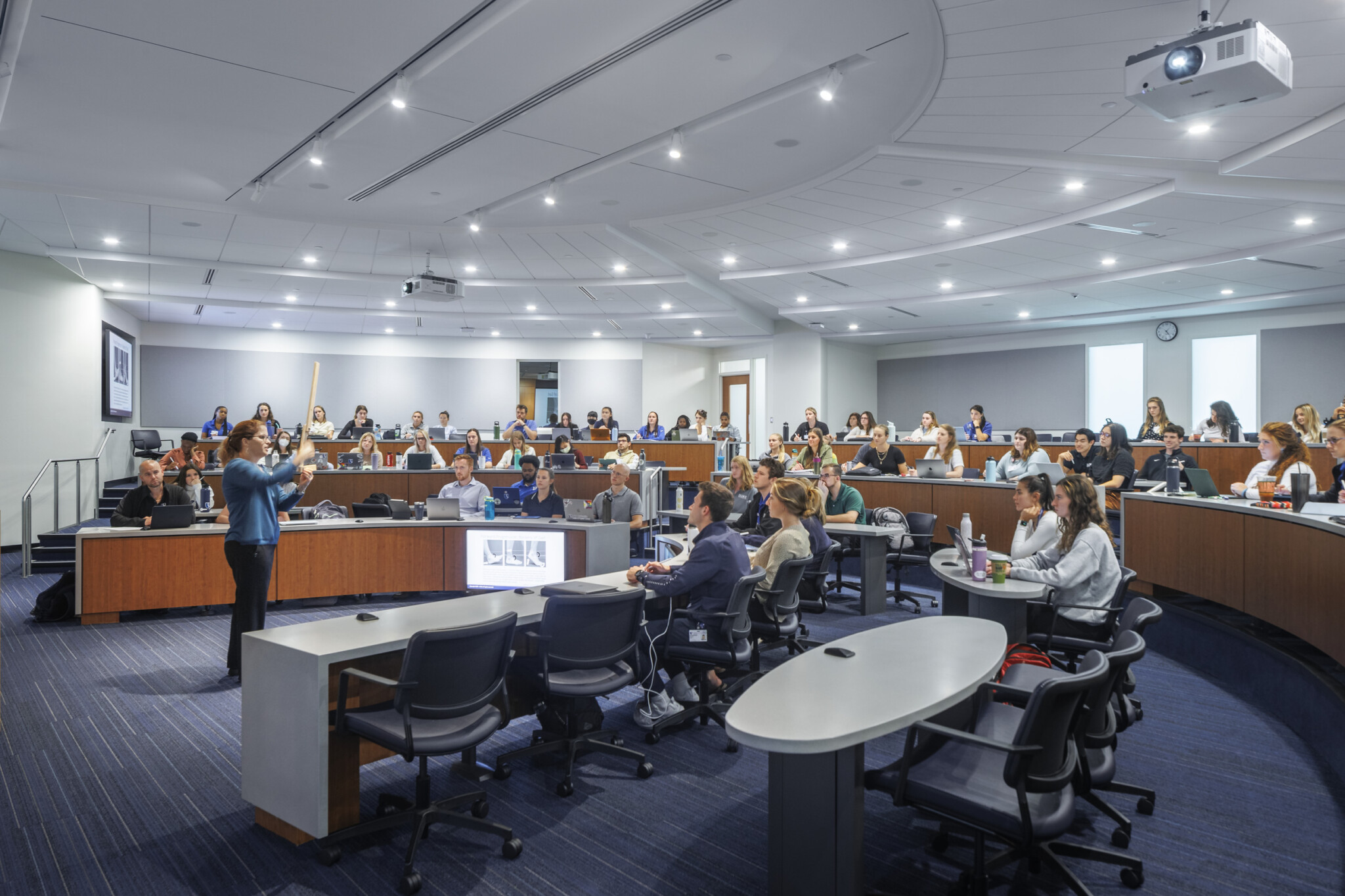

"The ability to co-locate orthopaedic surgery and physical therapy with the School of Nursing...will teach students the value of patient-centered care across multiple medical disciplines."Dr. Mary E. KlotmanDean, Duke University School of Medicine
Related Projects


Connect With Us

Gain Momentum
Our industry newsletter, Momentum, highlights projects, clients, and MEP and fire protection engineering trends