May 5, 2017
The Right Fit: Chilled Beam Technology
Chilled beam technology is seeing increased use in the U.S. as an energy-efficient option that can lower long-term operating costs in buildings. Darren Anderson, PE, CPD, LEED AP BD+C, an associate with Mueller Associates, discusses the advantage of using chilled beams and how the technology can impact the overall design of a building.
Q: What are the basics of chilled beam technology? How does it work?
A: Active chilled beam systems use conditioned air supplemented by ceiling-mounted chilled water heat exchangers. The beams receive air ducted from a central air handling unit and water piped from a central chilled water system. The amount of water varies in order to maintain a comfortable temperature in the space. The ducted air passing through each beam induces room air to flow through its heat exchanger, cooling the room as it circulates. The amount of air delivered to each space is minimal—often only the amount required for ventilation.
Q: What are the benefits?
A: Using water in a chilled beam heat exchanger to remove heat, rather than using conditioned air, is more efficient. Water can carry more energy than air, and this leads to lower operating costs. First costs to use chilled beam systems for an entire building are similar to costs for variable air volume systems when you factor in other design considerations. Chilled beam systems are more expensive than air-only systems with traditional air diffusers, but the ductwork and air handler capacity needs are reduced. There may also be less space required for the mechanical room and ceiling area.
Q: What types of spaces are appropriate for chilled beam technology?
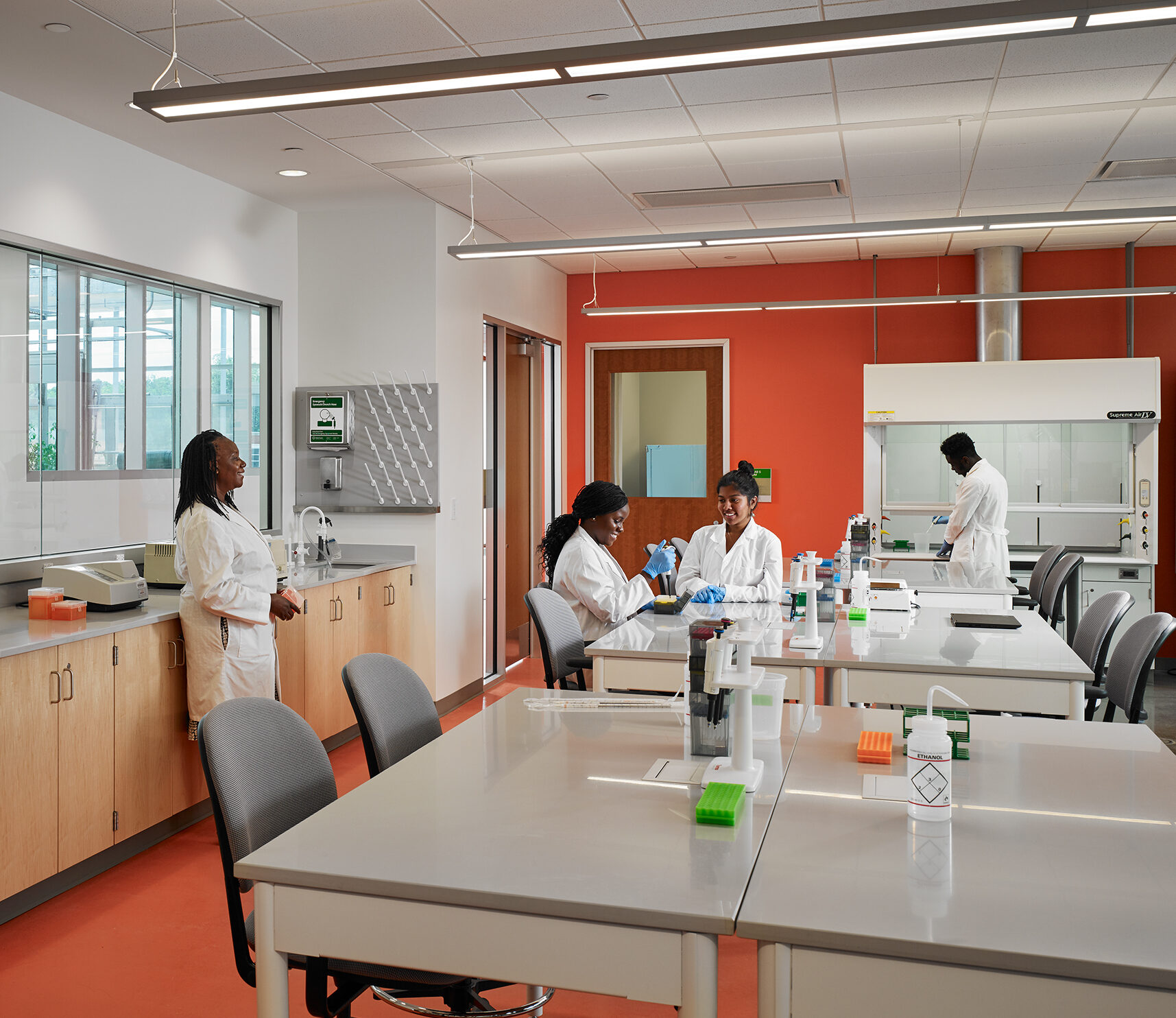
A: We are seeing an increased interest in chilled beam systems for laboratories in particular. Labs often house a lot of heat-generating equipment. The air cannot be recirculated, which can lead to high energy costs. The use of chilled beams assists in reducing the required airflow because the amount of air is driven by ventilation and not by the need to remove heat from the equipment. This lowers the overall amount of energy used.
Q: Does Mueller have any current projects that incorporate this approach?
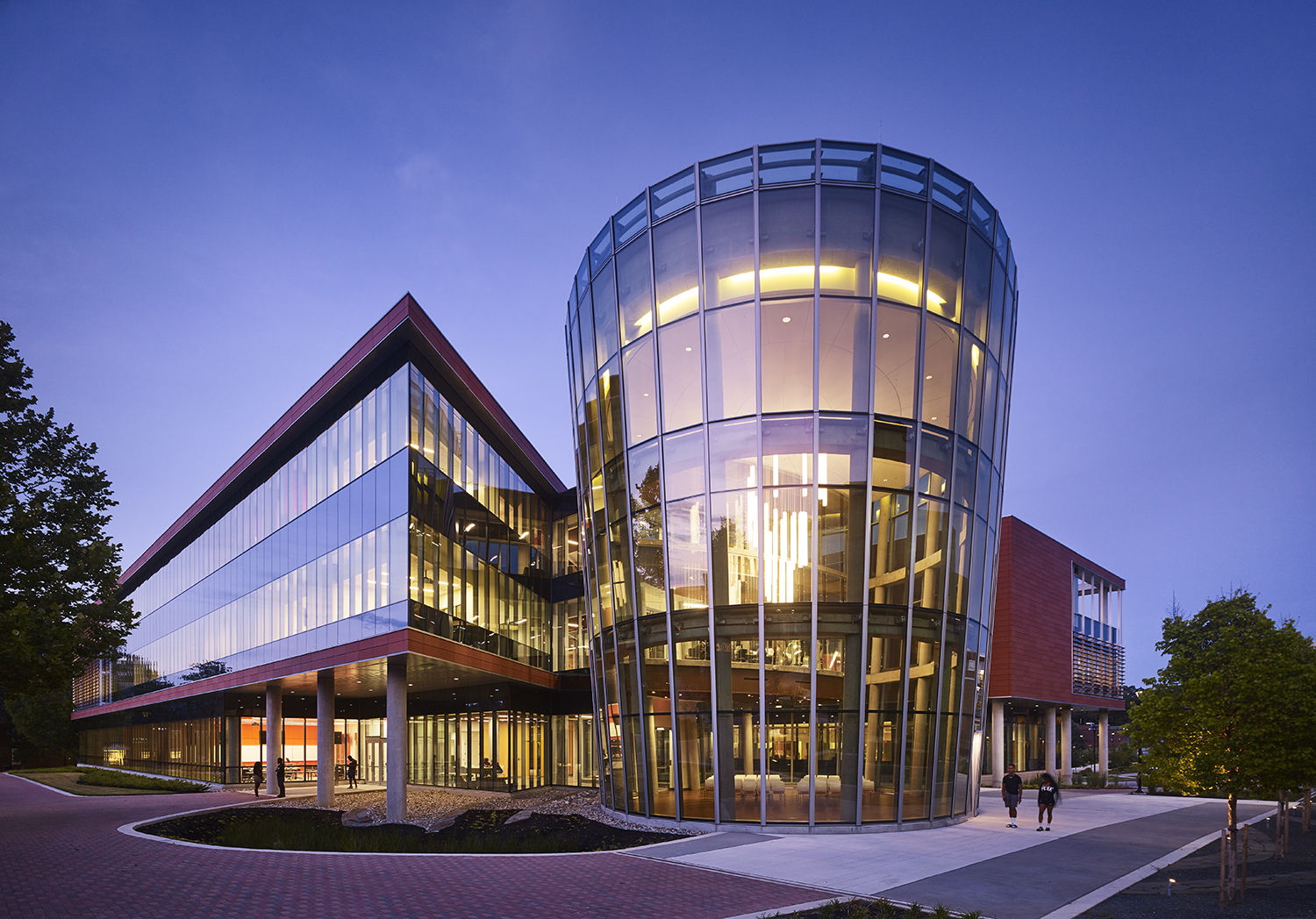
A: We are currently assisting Perkins&Will in the design of the new Natural Sciences, Mathematics, and Nursing Center at Bowie State University in Maryland. Perkins+Will has had success with the chilled beam approach and has been a proponent from the start of this project. The building has a number of laboratories and was a good candidate for using a chilled beam system.
Q: How has chilled beam technology made a difference in the Bowie State University project?
A: Incorporating chilled beams in the Natural Sciences, Mathematics, and Nursing Center has had a dramatic impact on the overall design. It has been very interesting to see how this technology can alter a design and have a positive impact on the overall cost.
Because the ducts required for the chilled beam system are smaller, the design team was able to reduce the building height by one foot on both the second and third floors. The two-foot reduction overall will save the university more than $300,000, which offsets the cost of the chilled beam system and lowers the life cycle cost of the building as well. Part of the cost-savings is a result of the smaller amount of dynamic glazing needed for the exterior windows, because of the reduced height.
Chilled beam technology is a strong option for new buildings, with a number of clear benefits. In our experience, the best results—and potential cost-savings—occur when the architectural and engineering team works creatively and in close collaboration, to be certain those benefits are realized.