Virginia Tech
Mitchell Hall
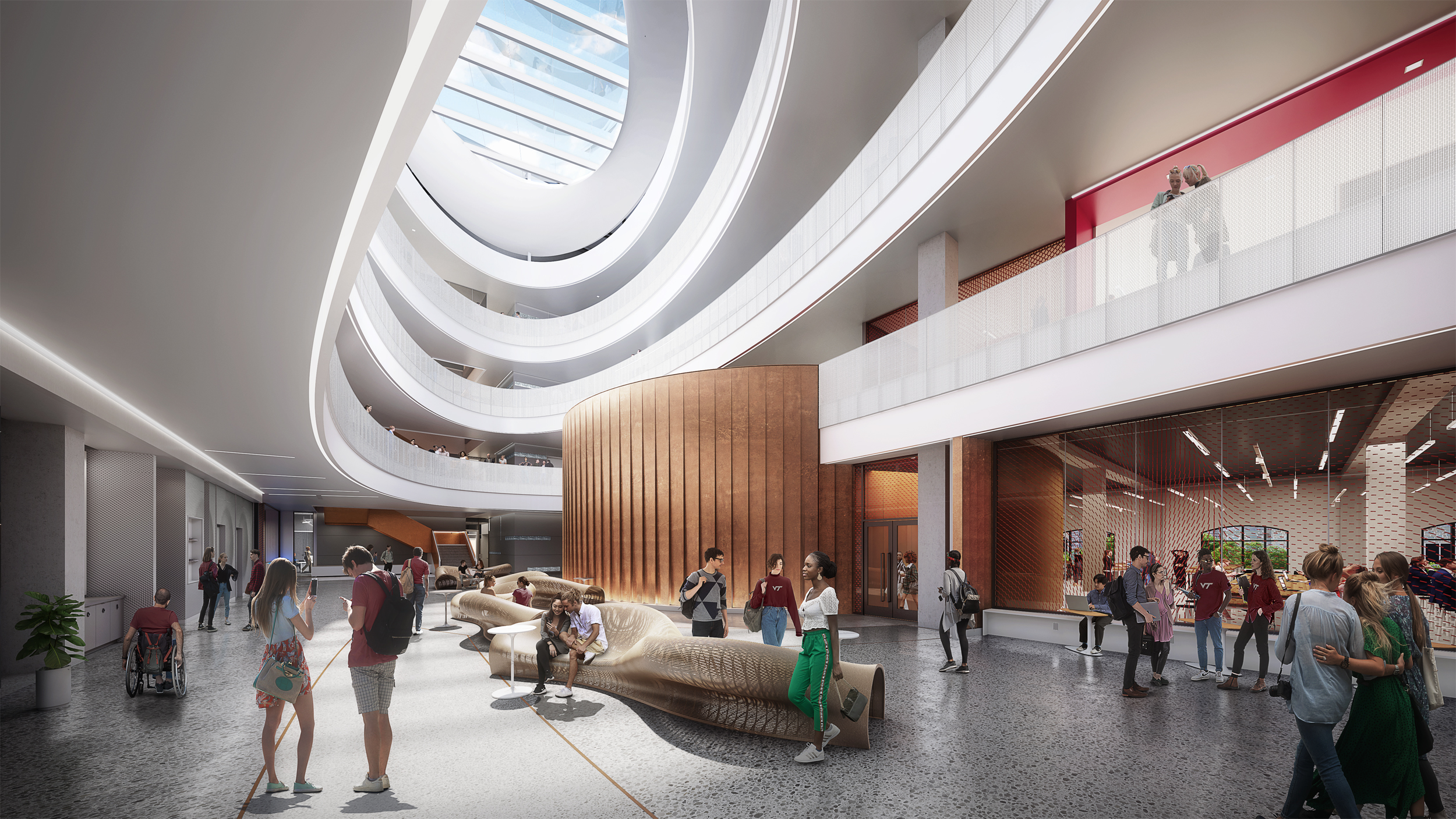
At the forefront of Virginia Tech’s transformation, Mitchell Hall represents a bold new vision for engineering education and sustainability. Designed by Perkins&Will, the 284,000-square-foot facility will replace Randolph Hall, a 1952 structure, with a next-generation academic and research hub that provides 70% more usable space within the same footprint.
As the largest building in the College of Engineering, Mitchell Hall is the first major project to advance Virginia Tech’s Climate Action Commitment—a roadmap toward carbon neutrality and sustainable growth. The facility will bring together classrooms, laboratories, offices, and maker spaces to foster experiential learning and interdisciplinary collaboration across multiple engineering disciplines.
Engineering for Innovation and Performance
Mueller Associates provides mechanical and electrical engineering design for this landmark facility, supporting Virginia Tech’s goal of making engineering and science “on display.” Each system is crafted to enhance visibility, functionality, and efficiency in an environment that integrates hands-on research and instruction.
Mitchell Hall’s energy-intensive programming—encompassing wet and dry labs, instrumentation spaces, and prototyping areas—demands precise climate control and flexibility. Mueller’s design leverages chilled beam technology, an energy-efficient approach to heating and cooling that uses water to transfer thermal energy throughout the building. This strategy enhances occupant comfort, reduces energy waste, and aligns with Virginia Tech’s ambitious sustainability goals.
Sustainability and Decarbonization in Action
Mitchell Hall embodies a new model of sustainable engineering design for higher education. The facility connects to the campus’s chilled water supply through dedicated heat recovery chillers, enabling the building to generate heat electrically while significantly reducing energy use and carbon emissions.
By integrating smart building controls, advanced metering, and optimized HVAC zoning, Mueller’s systems contribute to measurable efficiency gains and operational resilience. The project not only achieves energy reduction targets but also supports the university’s broader decarbonization initiatives across the Blacksburg campus.
Preserving a Legacy of Excellence
While redefining the campus’s academic core, Mitchell Hall also ensures the preservation of the university’s Stability Wind Tunnel—one of the largest university-owned wind tunnels in the nation and a hallmark of Virginia Tech’s engineering excellence.
Slated for completion in 2028, Mitchell Hall will set a new benchmark for energy efficiency, sustainability, and collaborative learning in academic engineering facilities nationwide.
Consulting Services
- HVAC Systems
- Electrical Power
- Revit
- Sustainable Design
Architect
Perkins&Will
Client History
-
2028
Mitchell Hall (Randolph Hall Replacement)


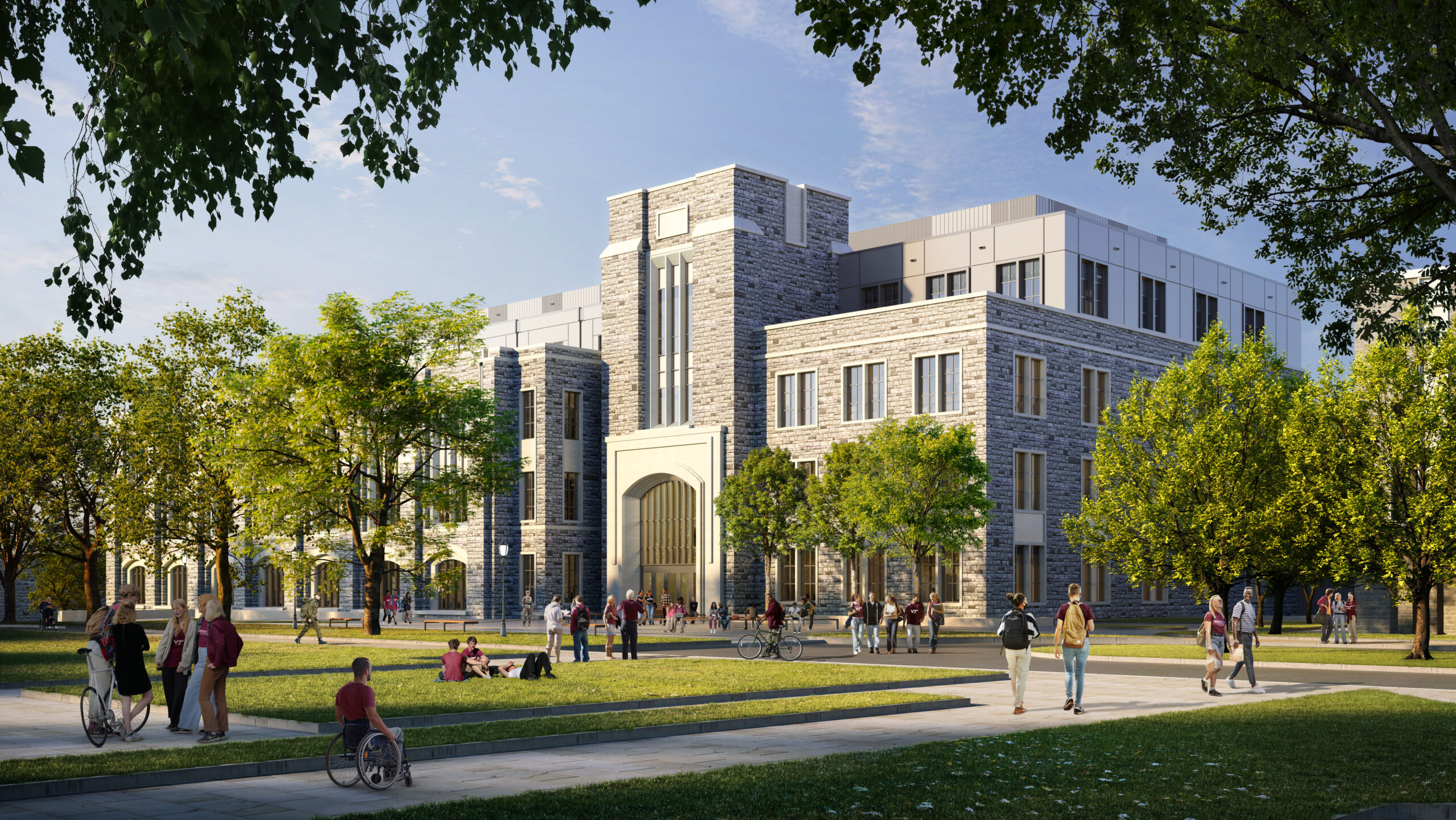


“Not only will every Virginia Tech engineering student benefit from Mitchell Hall’s flexible spaces and improved facilities, but its exterior features will transform the university’s North Academic District. It will ... provide much-needed space for experiential learning, all of which are important priorities outlined in the college’s strategic plan.”Julia M. RossPaul and Dorothea Torgersen Dean of Engineering, Virginia Tech
Related Projects

Connect With Us

Gain Momentum
Our industry newsletter, Momentum, highlights projects, clients, and MEP and fire protection engineering trends