Smithsonian Institution
National Postal Museum
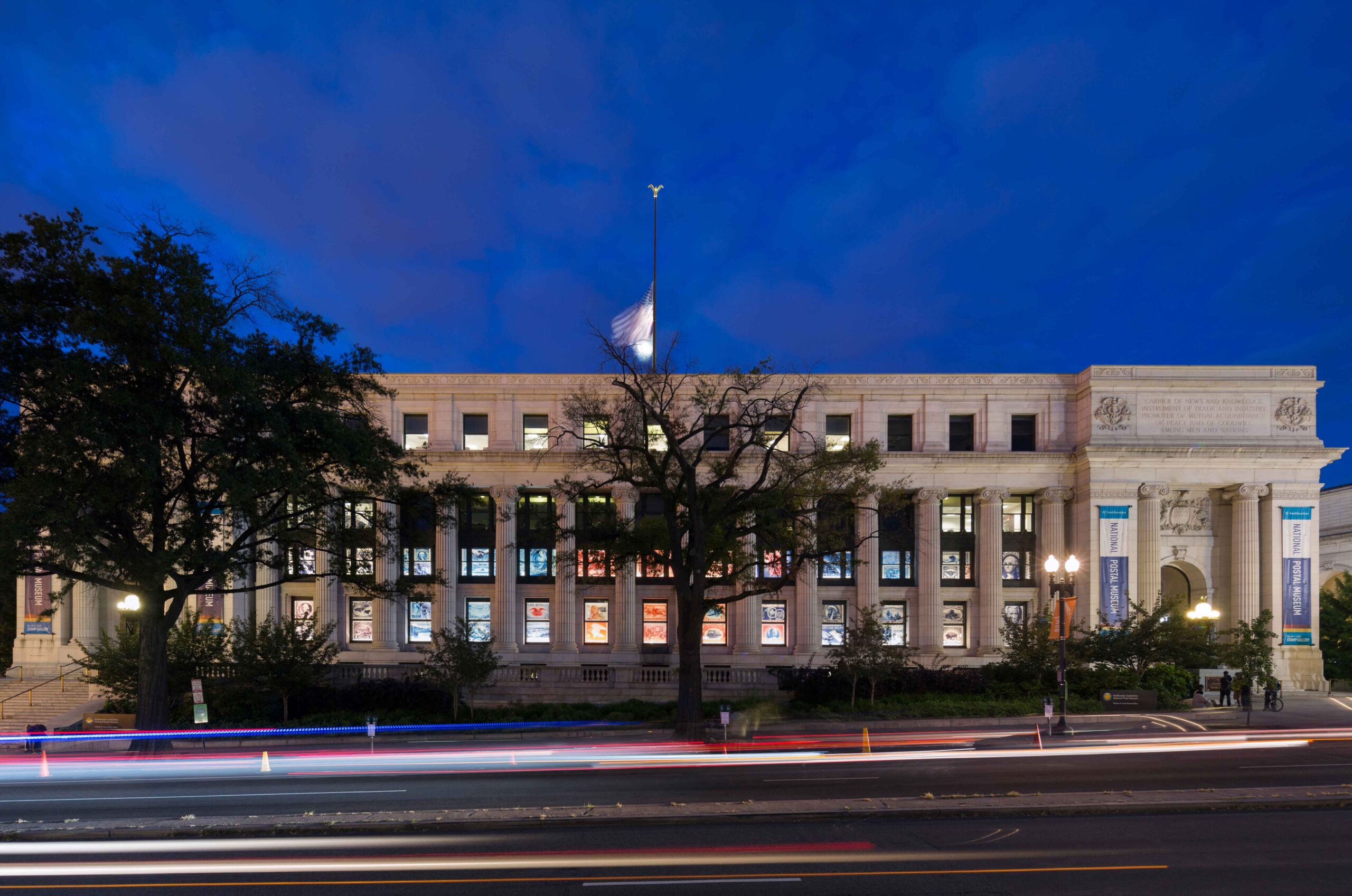
The William H. Gross Stamp Gallery is located within Washington, DC’s historic Postal Square Building, a Beaux-Arts landmark constructed between 1911 and 1914 and originally designed by D.H. Burnham & Company as the city’s main post office. Today, the building houses the National Postal Museum, where the new gallery provides a prominent street-level presence and a direct public entrance on Massachusetts Avenue.
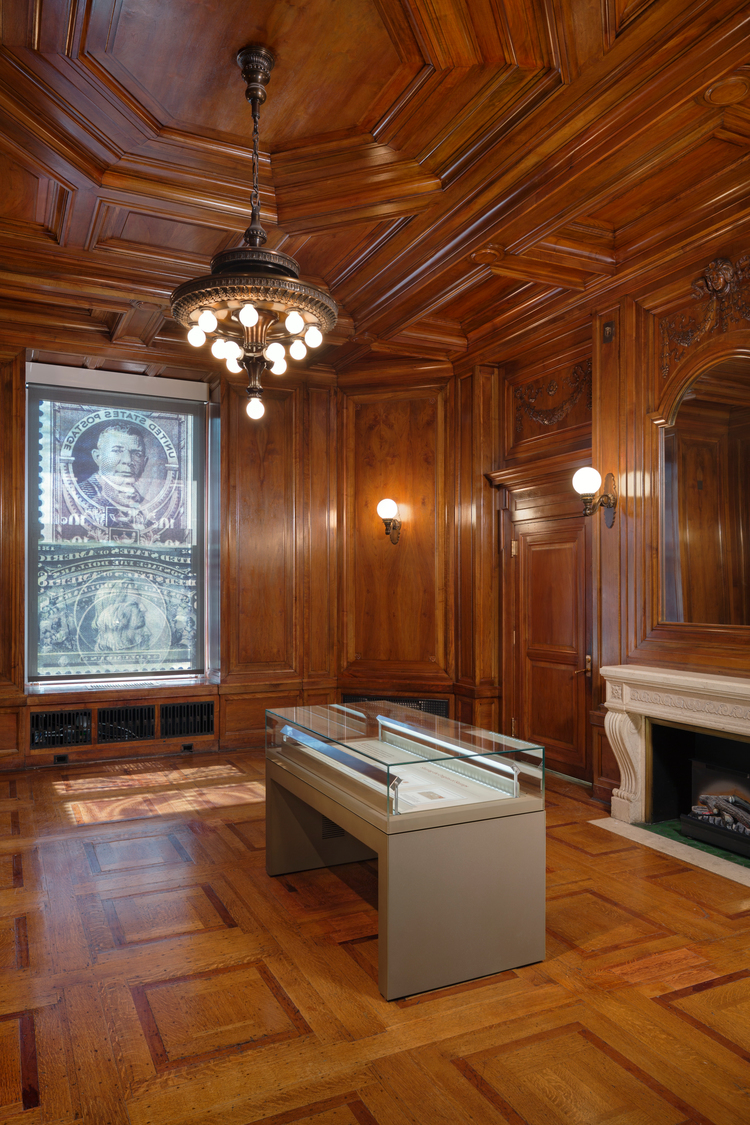
The 14,000-square-foot renovation transformed a former restaurant space into the world’s most extensive gallery dedicated to philately, while restoring and revealing historic architectural features—including the meticulously rehabilitated chestnut-paneled Postmaster’s Suite.
Balancing Artifact Protection with Historic Architecture
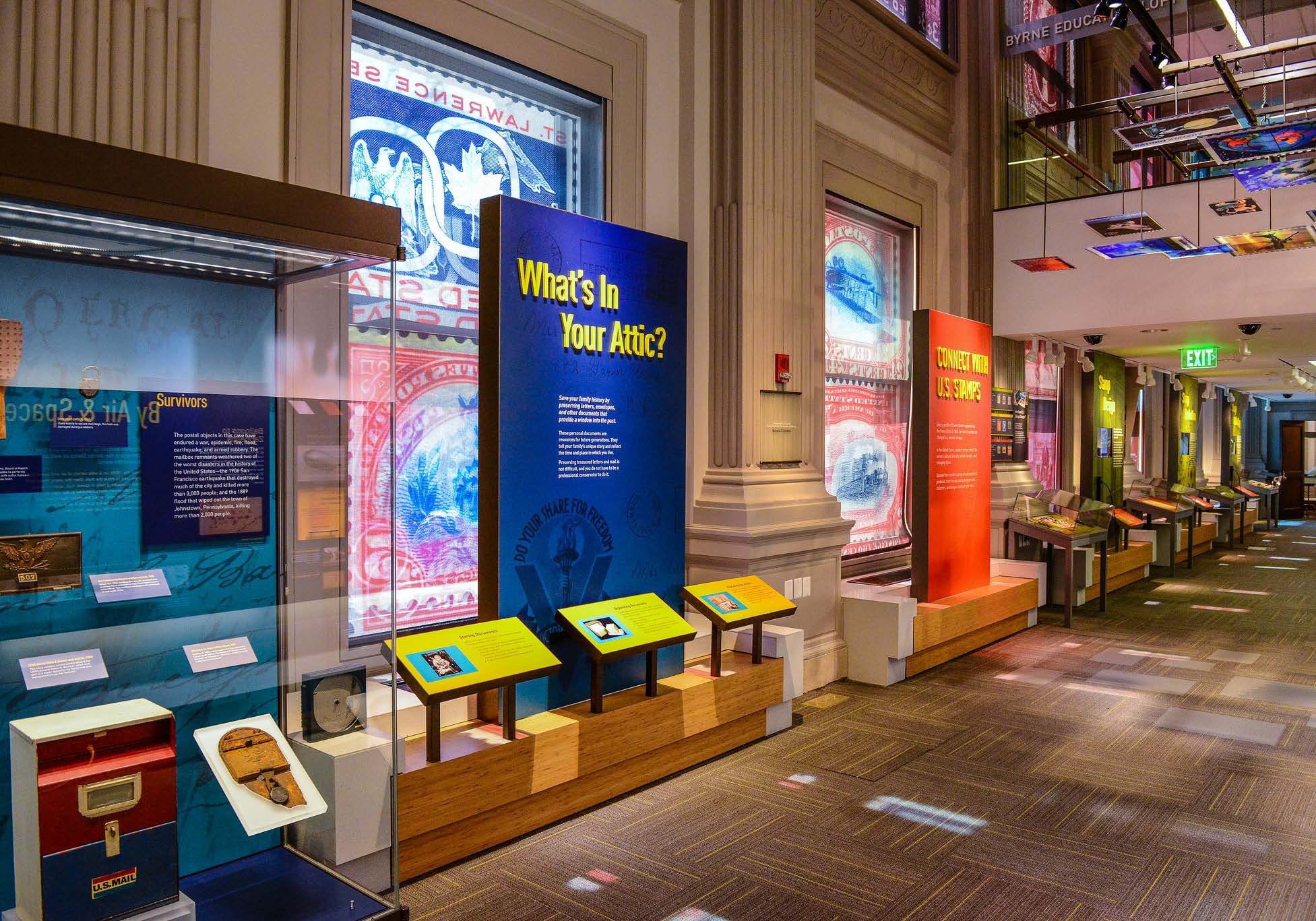
Designed by Quinn Evans, the gallery carefully balances two competing priorities: the need for a controlled “black box” museum environment to protect delicate artifacts, and the desire to showcase the building’s historic fabric, oversized windows, and original detailing.
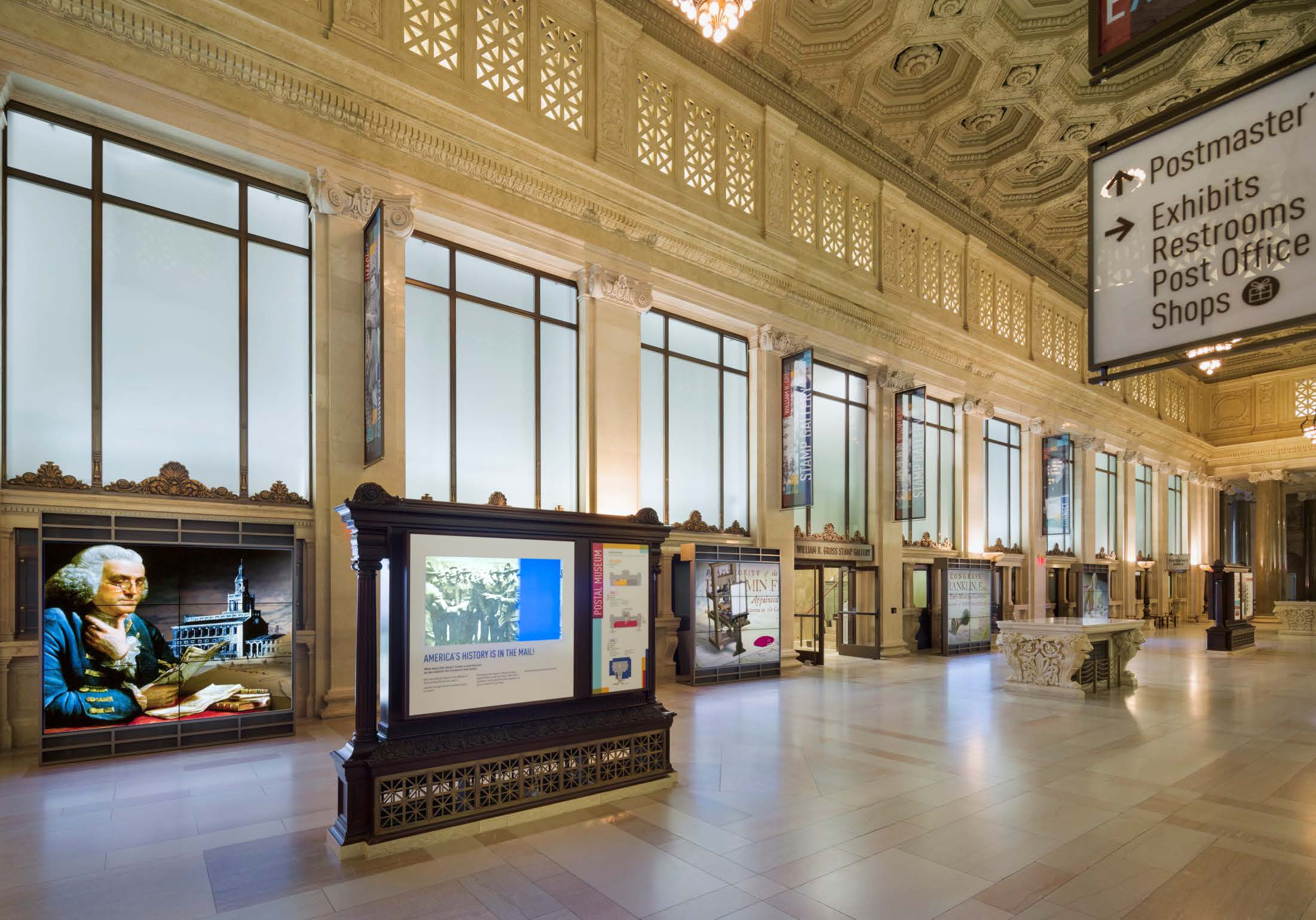
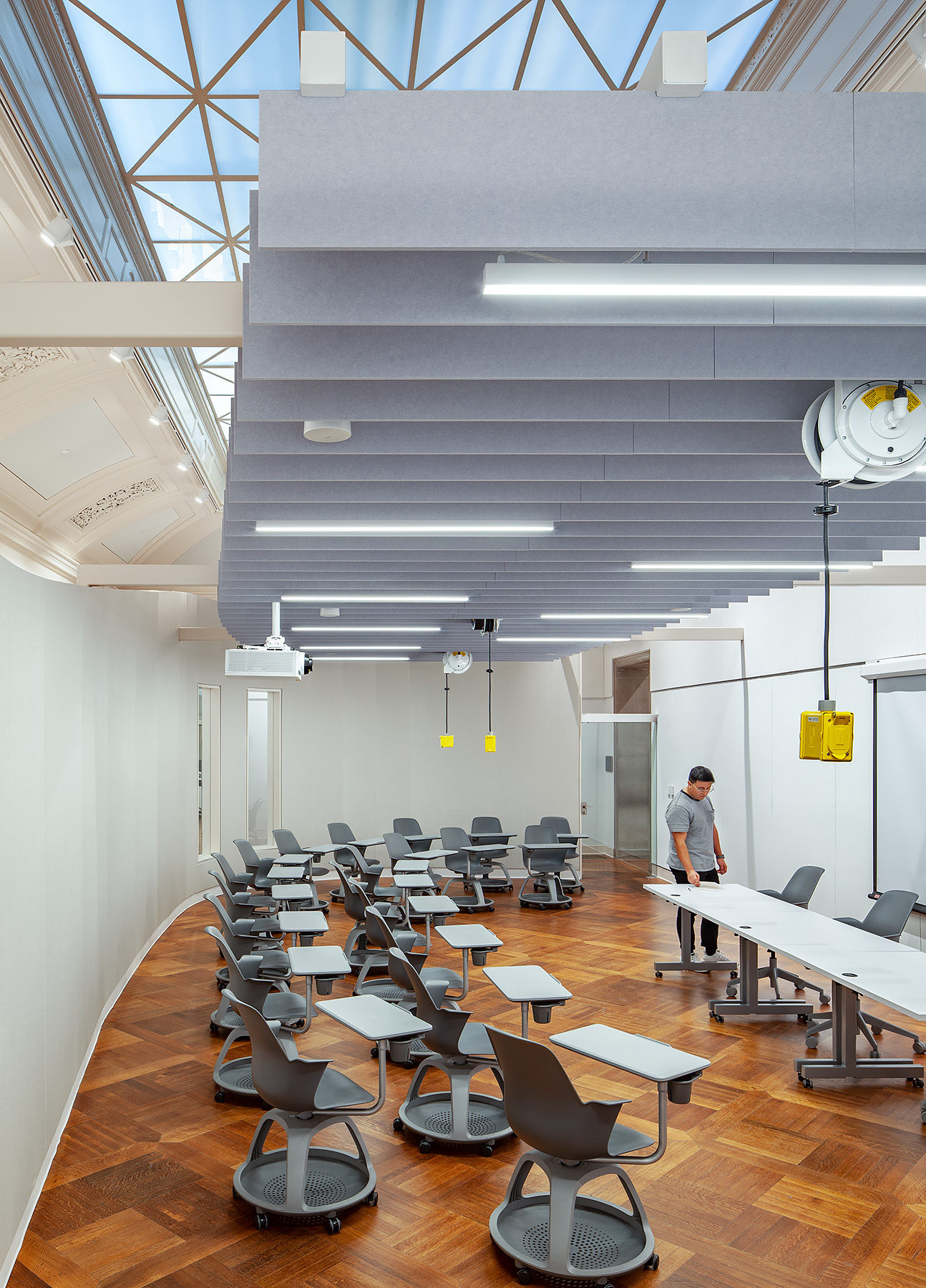
The expanded gallery includes permanent and traveling exhibition spaces, a mezzanine Learning Loft for education programs, and a Welcome Center serving the entire museum. New gallery entry points integrated into the historic lobby encourage visitors to move seamlessly between exhibitions while preserving the integrity of the landmark interior.
Engineering for Conservation at the Smallest Scale
Mueller Associates provided mechanical, electrical, and plumbing engineering services for the project, delivering systems that met the Smithsonian’s most stringent conservation standards. Stamps—printed on paper with historic inks—are among the most environmentally sensitive artifacts in any museum collection, requiring exceptionally stable temperature, humidity, air quality, and light levels.
Mueller’s work included the replacement and reconfiguration of the entire electrical distribution system serving the gallery, supporting advanced environmental controls, precise exhibition lighting, and integrated security systems. Lighting levels were carefully coordinated to allow visitors to examine fine details while limiting exposure that could cause long-term deterioration.
Hidden Infrastructure Supporting Public Access
The gallery’s systems operate continuously and quietly, maintaining strict environmental parameters while remaining invisible to visitors. New infrastructure was meticulously coordinated to spotlight architectural details rather than conceal them, allowing historic windows, finishes, and proportions to reemerge as part of the visitor experience.
Through careful planning and coordination, the project demonstrates how modern museum performance can be achieved within a historic structure—supporting conservation, education, and public engagement without compromising architectural integrity.
A World-Class Gallery for a World-Class Collection
Opened in 2013, the William H. Gross Stamp Gallery significantly expanded the National Postal Museum’s ability to share its collections, providing unprecedented access to more than 20,000 philatelic objects. The project earned LEED Gold certification, recognizing both its energy efficiency and its sensitive adaptive reuse of a landmark building.
For Mueller Associates, the gallery exemplifies engineering at its most exacting: precision systems designed to protect the smallest artifacts while enabling a welcoming, accessible, and architecturally rich museum experience.
Sustainability
LEED Gold
Consulting Services
- HVAC Systems
- Electrical Power
- Plumbing Systems
- Historic Preservation
- Feasibility Studies
- Lighting Design
- Sustainable Design
- Value Engineering
Architect
Quinn Evans
Client History
-
2027
Hirshhorn Museum and Sculpture Garden Revitalization
-
2026
National Air and Space Museum Revitalization


Related Projects


Connect With Us

Gain Momentum
Our industry newsletter, Momentum, highlights projects, clients, and MEP and fire protection engineering trends