Smithsonian Institution
Sant Ocean Hall
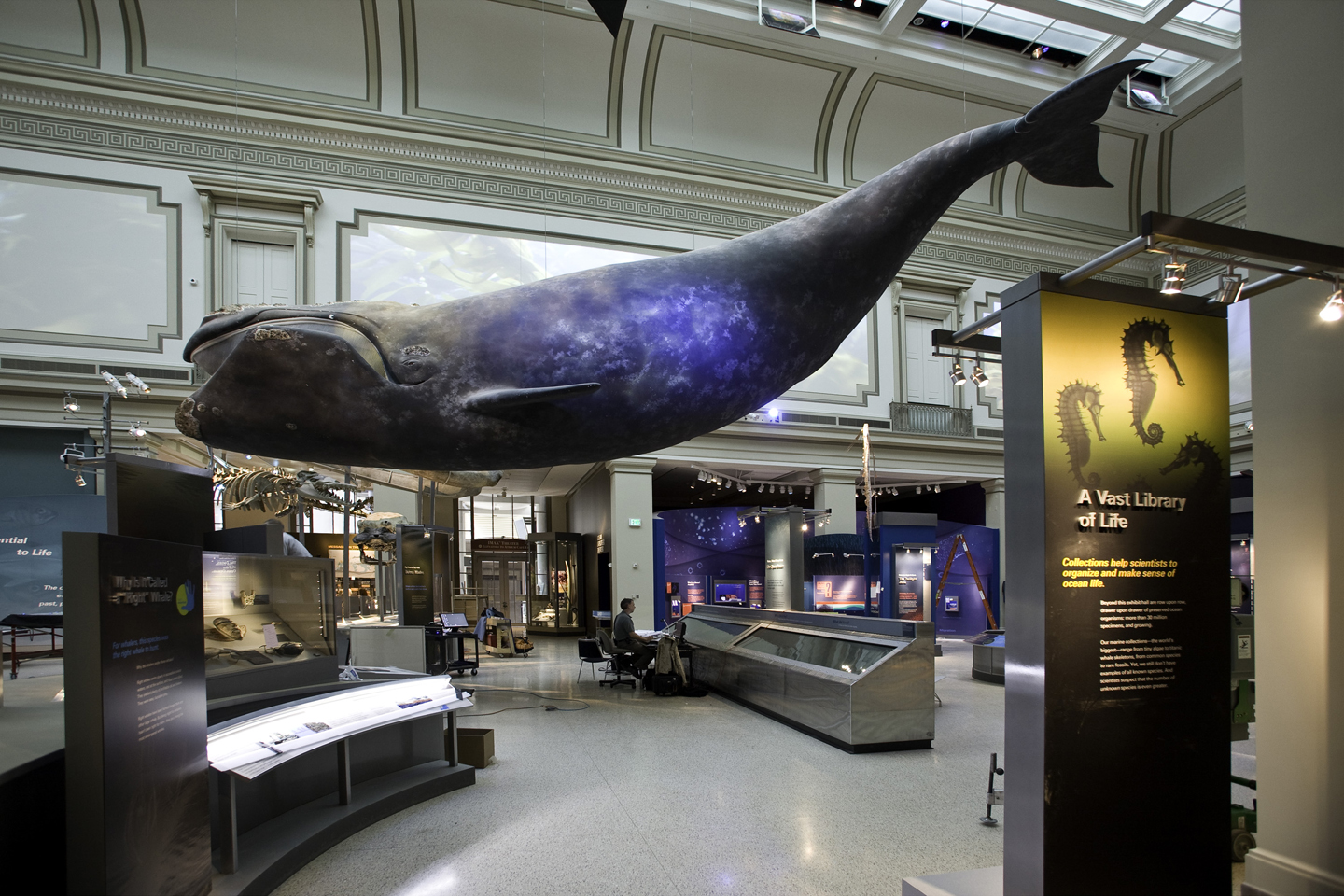
Located within the Smithsonian Institution’s National Museum of Natural History, the Sant Ocean Hall occupies one of the building’s original Beaux-Arts central halls, first opened to the public in 1910. Over nearly a century, the space had been repeatedly modified, obscuring its original scale, architectural detailing, and spatial relationships.
The 23,000-square-foot renovation reversed decades of alterations, restoring the hall’s early 20th-century grandeur while preparing it to support one of the Smithsonian’s most ambitious permanent exhibitions. The project reopened second-floor balconies, removed a 1960s-era mezzanine, and reintroduced soaring volumes with 52-foot ceilings in the central gallery and 22-foot ceilings in the side galleries.
Engineering a Landmark Smithsonian Renovation
Working with architect Quinn Evans, Mueller Associates provided comprehensive mechanical, electrical, and plumbing engineering for what became the largest renovation in the museum’s 100-year history.
Mueller designed entirely new systems to replace outdated infrastructure dating to the 1960s, carefully integrating modern performance requirements within a highly significant historic structure. Four new variable-volume air-conditioning units were installed to deliver precise temperature and humidity control for marine specimens, while remaining largely concealed within the building’s fabric to preserve restored ceilings, skylights, and ornamental plasterwork.
Balancing Conservation, Architecture, and Visitor Experience
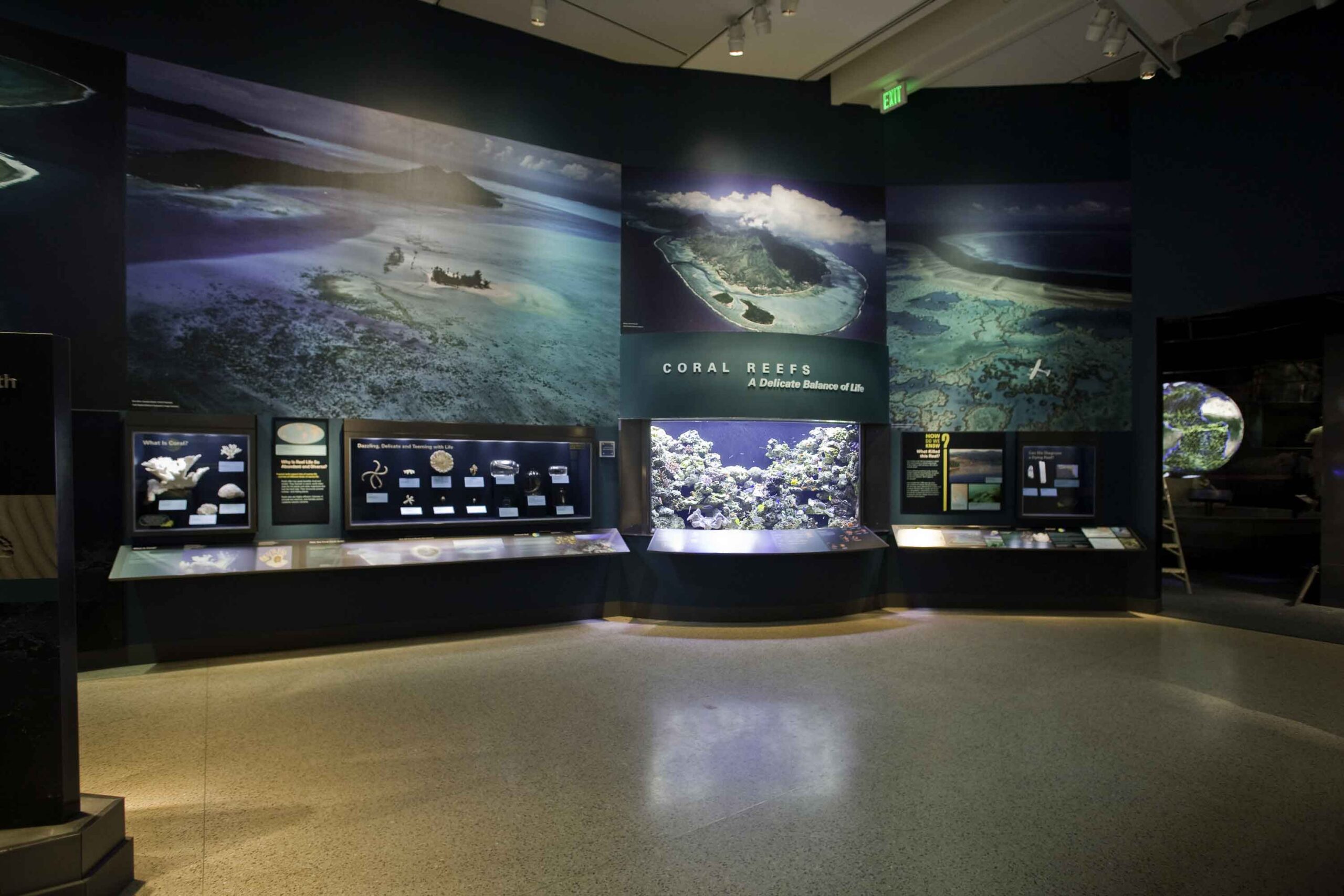
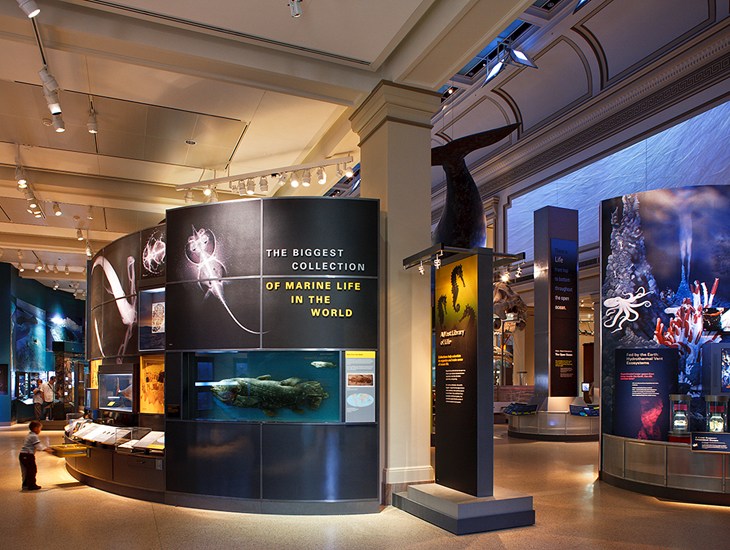
The exhibition features 674 marine specimens and models drawn from the museum’s collection of more than 80 million objects, including a full-scale North Atlantic right whale suspended above the gallery, immersive video installations, and a living coral reef aquarium. Each element required specialized environmental, lighting, and power systems to support both artifact preservation and visitor engagement.
Mueller’s engineers designed advanced lighting controls and electrical distribution systems to support dramatic exhibit lighting, high-definition media, and life-safety systems without compromising the hall’s historic character. Air distribution, ductwork, and sprinkler piping were carefully routed to avoid crossing character-defining ceilings, allowing restored architectural features to remain fully visible.
Phased Construction in an Active Museum
The renovation was executed in carefully planned phases to allow the museum to remain open throughout construction. Temporary circulation routes were established to maintain visitor access and protect adjacent collections, while new systems were installed and commissioned within an active, high-traffic national museum.
A Renewed Space for Discovery
When Sant Ocean Hall reopened, it reestablished one of the National Mall’s great interior spaces while providing a dynamic educational environment that explores the ocean as a complex, interconnected global ecosystem. The restored hall now serves as both a monumental architectural space and a modern exhibition platform—supported by Mueller’s invisible yet essential engineering systems.
The project exemplifies Mueller Associates’ approach to museum engineering: integrating modern performance, sustainability, and conservation requirements within historic architecture to support preservation, storytelling, and public engagement for generations to come.
Consulting Services
- HVAC Systems
- Electrical Power
- Plumbing Systems
- Cost Estimating
- Historic Preservation
- Lighting Design
- Sustainable Design
Architect
Quinn Evans
Client History
-
2027
Hirshhorn Museum and Sculpture Garden Revitalization
-
2026
National Air and Space Museum Revitalization
"The ocean is a vast ecosystem crucial to our existence, yet scientific and public understanding of the ocean is still limited. That's why the new Sant Ocean Hall, the most ambitious renovation in the museum's history, is so vitally important. It will greatly expand our knowledge of this extraordinary ocean planet we call home."Cristian SamperMuseum Director
Related Projects


Connect With Us

Gain Momentum
Our industry newsletter, Momentum, highlights projects, clients, and MEP and fire protection engineering trends